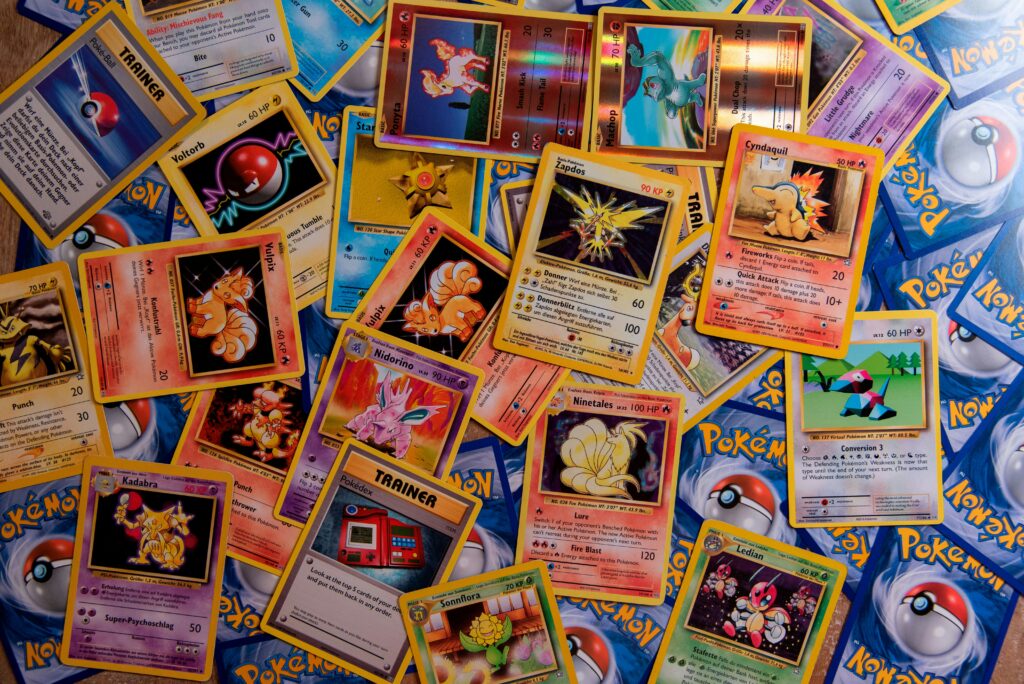
Pokémon cards have grown from a childhood collectible into a market where individual cards regularly sell for thousands of dollars, and the gap between a card’s face value and its actual resale price can be enormous. That gap comes down to a handful of factors working together: rarity, condition, authenticity, and whether the card has been professionally graded. Sellers sitting on old collections or recent pulls often assume value is obvious from a card’s rarity symbol alone, but the reality is more layered, and understanding what actually drives price helps avoid both underselling a genuinely valuable card and overestimating one that looks impressive but isn’t worth much.
What Makes a Pokémon Card Valuable in the First Place
Rarity is the most visible factor, but it isn’t the only one, and it doesn’t always mean what casual sellers assume. Print run size matters more than the rarity symbol printed on the card itself, since some cards marked as common or uncommon from older, smaller print runs are genuinely harder to find than cards labeled rare from a set that was printed in massive quantities. Set age plays a role too, with early releases from the late 1990s generally commanding stronger interest than more recent sets, simply because fewer of those original cards survived in good condition.
Specific card types also carry their own demand independent of general set rarity. First edition cards, shadowless prints from the earliest Western releases, holographic cards, and cards featuring popular characters like Charizard tend to hold value better than statistically rarer cards featuring less recognizable Pokémon. Promotional cards distributed through limited events or specific product bundles can also command strong prices, particularly when the original distribution was small and well documented. None of these factors work in isolation, and a card’s actual resale value usually reflects some combination of print scarcity, character popularity, and how collectible the specific print run has become over time.
Assessing Condition Before You Price Anything
Condition affects Pokémon card value more dramatically than most sellers expect, and even small flaws can cut a card’s worth by a significant margin. Corners are usually the first thing collectors check, since soft or rounded corners from being carried in a pocket or handled without a sleeve are immediately visible and hard to overlook. Surface scratches, print lines, and whitening along the edges, where the card’s black border has worn down to reveal white cardstock underneath, all factor into how a card gets evaluated.
Centering, or how evenly the image sits within the card’s border, is another detail that matters more than casual collectors realize, since even a card in otherwise flawless condition can lose significant value if the image is noticeably off-center. Before researching where to sell Pokémon cards, it helps to sort a collection by rough condition tiers, separating cards with obvious wear from those that look close to pack-fresh, since this initial sorting saves time later and gives a realistic sense of which cards are worth researching individually versus which ones are only worth bulk value.
Confirming Authenticity Matters as Much as Condition
Counterfeit Pokémon cards have become sophisticated enough that casual visual inspection isn’t always reliable, and sellers unknowingly offering fake cards risk damaging their credibility with buyers or facing rejected offers from resale platforms. A few checks help catch most counterfeits before they become a problem. Genuine cards have a specific texture and weight, feeling slightly different from ordinary cardstock due to their layered construction, and holding a suspected card up to light can reveal whether it has the light-blocking layer present in authentic prints, since many counterfeits appear translucent when backlit.
Font consistency, color saturation, and the sharpness of printed text also differ noticeably between genuine cards and counterfeits, though these differences can be subtle without a genuine card on hand for direct comparison. Sellers uncertain about a card’s authenticity, particularly for higher-value pulls or cards acquired secondhand rather than opened directly from sealed product, should verify authenticity before spending time researching where to sell Pokémon cards, since most reputable buyers and grading services will reject suspected counterfeits outright rather than issuing an offer or a grade.
Understanding Grading and When It’s Worth the Cost
Professional grading, performed by services that evaluate a card’s condition on a numeric scale and encapsulate it in a tamper-proof case, can significantly increase resale value for cards that grade well, but it isn’t the right move for every card in a collection. Grading involves submission fees and processing time, and a card graded at a lower score sometimes ends up worth less than it would have sold for raw, since the grading process itself can reveal flaws that weren’t obvious beforehand.
A reasonable approach to deciding whether grading makes sense includes a few consistent checks:
- Estimated raw value, since grading fees only make financial sense for cards likely to sell for a meaningful multiple of the submission cost once graded.
- Visible condition under close inspection, focusing on corners, centering, and surface quality, since cards with obvious flaws rarely grade high enough to justify the expense.
- Current market demand for graded copies of that specific card, since some cards see a much larger price jump from grading than others.
- Turnaround time offered by the grading service, particularly relevant for sellers wanting to sell relatively soon rather than holding cards for months awaiting results.
Cards that clearly show wear, or lower-value commons and uncommons, generally aren’t worth the cost of professional grading, while rare, high-demand cards in apparent near-mint condition often see a substantial value increase once graded and encapsulated.
Choosing Safe Transaction Options
Once a collection has been sorted, authenticated, and priced realistically, the final decision involves choosing how to actually complete a sale safely. Direct sales through online marketplaces or dedicated trading card platforms can produce strong prices for well-documented, individually valuable cards, though they require more effort in photographing, listing, and communicating with buyers, along with some exposure to payment disputes or unreliable purchasers. In-person transactions at local card shops or conventions offer immediate payment and eliminate shipping risk, though prices offered are often lower than what a patient online sale could bring.
Buyback platforms built specifically around trading cards provide a faster, lower-effort alternative, offering set prices based on submitted card details and condition photos, with shipping handled by the platform. This route trades some potential earnings for speed and reduced risk, since there’s no need to negotiate with individual buyers or worry about payment fraud on a peer-to-peer sale. For sellers with larger collections spanning a wide range of values, splitting the approach, sending higher-value graded cards through a marketplace while bulk-selling lower-value commons through a buyback platform, often produces a better overall return than committing an entire collection to a single sales channel.
Key Takeaways
Pokémon card resale value comes down to a combination of rarity, physical condition, confirmed authenticity, and whether grading adds enough value to justify its cost, and skipping any of these steps tends to leave money on the table or create problems during a sale. Sorting a collection honestly by condition, verifying authenticity on higher-value pieces, and being selective about which cards actually benefit from professional grading sets up a much stronger foundation than pricing cards based on rarity symbols alone. From there, matching each card’s value to the right sales channel, whether that’s a patient marketplace listing, an in-person shop sale, or a fast buyback platform, determines how much of that value a seller actually walks away with.
 Loren Hursterer is the kind of writer who genuinely cannot publish something without checking it twice. Maybe three times. They came to expert analysis through years of hands-on work rather than theory, which means the things they writes about — Expert Analysis, Latest Technology Updates, Mental Health Innovations, among other areas — are things they has actually tested, questioned, and revised opinions on more than once.
That shows in the work. Loren's pieces tend to go a level deeper than most. Not in a way that becomes unreadable, but in a way that makes you realize you'd been missing something important. They has a habit of finding the detail that everybody else glosses over and making it the center of the story — which sounds simple, but takes a rare combination of curiosity and patience to pull off consistently. The writing never feels rushed. It feels like someone who sat with the subject long enough to actually understand it.
Outside of specific topics, what Loren cares about most is whether the reader walks away with something useful. Not impressed. Not entertained. Useful. That's a harder bar to clear than it sounds, and they clears it more often than not — which is why readers tend to remember Loren's articles long after they've forgotten the headline.
Loren Hursterer is the kind of writer who genuinely cannot publish something without checking it twice. Maybe three times. They came to expert analysis through years of hands-on work rather than theory, which means the things they writes about — Expert Analysis, Latest Technology Updates, Mental Health Innovations, among other areas — are things they has actually tested, questioned, and revised opinions on more than once.
That shows in the work. Loren's pieces tend to go a level deeper than most. Not in a way that becomes unreadable, but in a way that makes you realize you'd been missing something important. They has a habit of finding the detail that everybody else glosses over and making it the center of the story — which sounds simple, but takes a rare combination of curiosity and patience to pull off consistently. The writing never feels rushed. It feels like someone who sat with the subject long enough to actually understand it.
Outside of specific topics, what Loren cares about most is whether the reader walks away with something useful. Not impressed. Not entertained. Useful. That's a harder bar to clear than it sounds, and they clears it more often than not — which is why readers tend to remember Loren's articles long after they've forgotten the headline.